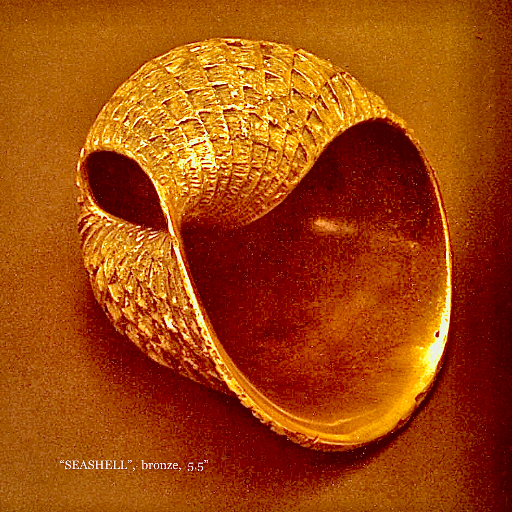
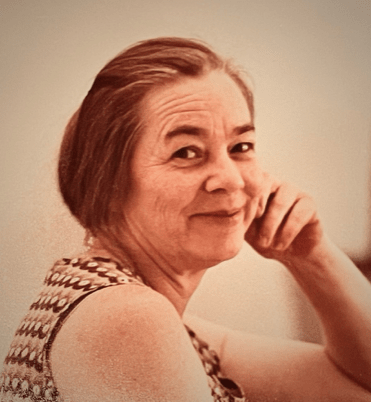
Marian Ruth Müeller Jacob (1925-2022), was an American artist of many talents. Trained first as a teacher and then as a sculptor, she spent most of her life in the arts, exploring, expanding her range, combining fine design, realism, and expressionism. As a sculptor, her most recognized work is a series of bronze castings that hold a unique place among other major late 20th Century sculptors. She was curious, inventive, fluent in the language of form and able to work with any kind of material. Her creations evolved from an inexhaustible study of nature, life, literature, science, and history and they reflect her strength, balance, energy, beauty and grace.
Marian Jacob was born in Sheboygan, Wisconsin, near the shores of Lake Michigan. She spent summers at Willowbrook Farm in Cedarburg, where she developed a deep respect and appreciation of the natural world. Her father, Herbert Albert Müeller, was a furniture designer who introduced her to drawing at a young age. Her mother, Ida Augusta Wilhelmina (Bartel) Müeller, was a nurse and a teacher who instilled in Marian a desire to teach, which was a profession available to women in that day. Her sister, Felicité (Müeller) Doll, was four years older, excelled at everything and was particularly inclined toward music.
Childhood in Sheboygan and Cedarburg was a happy time. Marian attended Sheboygan Central High School, where among other things, she won an art competition with a clay sculpture, played the French horn in the band and marched as a Majorette. She was an interested, active teenager and her name appeared in the local newspaper on several occasions. She earned a scholarship to attend the Wisconsin State Teacher’s College – Milwaukee (now the University of Wisconsin) where she excelled in art and was recognized as a gifted instructor. She graduated with a Bachelor of Science in Art Education in 1947. While in college, with the encouragement of her professor, Elsa E. Ulbricht (1885-1980), Marian taught at the Saugatuck School of Painting, (also known as the Ox-Bow School of Art and Artisits’ Residency), the Milwaukee Art Institute and the Jewish Art Center, also in Milwaukee. During this time, she was also an assistant in the studio of LaVera Pohl.
Upon graduation, Marian began working at the Toledo Museum of Art, where she met lifelong friend, mosaic artist Marjorie Kreilick (1925-2023). At the museum, Marian taught classes and designed installations. One December, with absolutely no funding, she created a Christmas show featuring local product design. She visited stores, companies and factories in the Toledo area where she selected examples of the best-designed products, (including tea kettles, pots, cups and other objects). She negotiated to take them on loan for the museum show, which was a success both for the museum and the companies/manufacturers involved.
While at Toledo, Marian met Harvey Littleton (1922-2013), who was studying at the Cranbrook Academy of Art in Bloomfield Hills, Michigan, and simultaneously teaching at the Toledo Museum School. At the time, Marian was interested in teaching and, upon learning more about Cranbrook, thought that a degree from that academy would help her in getting a teaching job. As a result, she prepared her portfolio, submitted an application, was accepted with a full scholarship, and enrolled in the sculpture program to study under Carl Milles (1875-1955, Sculptor in Residence from 1931 to 1951) and his main assistant, Berthold “Tex” Schiwetz (1909-1971). At Cranbrook she also had access to all the studios, including textiles, pottery, painting, woodworking, metal/jewelry, etc. The summers were spent teaching, first at her alma mater, the University of Wisconsin, and then at the University of Southern California (USC), upon invitation from Don Goodall (1912-1997), who had been dean of the education program at Toledo and became Chairman of the Department of Fine Arts at USC. In May of 1952, Marian received the distinguished Medal of Achievement in Sculpture from Cranbrook and graduated with a Master of Fine Arts degree. Three of her sculptures were selected to be part of the 1952-53 Student Traveling Exhibition, a nationwide tour sponsored by the Museum of the Cranbrook Academy of Art. She returned to USC in the summer of 1952 and then went on to teach at the University of Wisconsin in the fall.
At Cranbrook, Marian met David Jacob, who was studying in the architecture department. He would alter the course of her life. David was forming a team to enter a competition sponsored by the American Academy in Rome and needed a sculptor. Marian was recommended to him by faculty as an accomplished sculptor who was wonderful to work with. Thus began a partnership that lasted a lifetime: in May 1953 they were married. Marian finished teaching the spring semester at Wisconsin, declined the summer teaching session at USC, and moved to Alexandria, Virginia to join David who was now a Navy Lieutenant stationed at the Pentagon.
From 1953 to 1956 while in Virginia, Marian had access to the Naval arts workshop in Anacostia and the Creative Arts Workshop in Washington D.C. She used these venues to produce a number of ceramic and terracotta sculptures, including animal forms, vases, torso, busts and other forms. She also produced the first two of five daughters.
In late 1955 Marian and David each applied for the Rome Prize at the American Academy in Rome (AAR) hoping that one or the other would win. To their delight, David was awarded the fellowship, but the Academy also offered to provide work space and amenities to Marian, whom they deemed an equally strong candidate. At the same time, David was offered a job at the architectural firm of Eero Saarinen where he worked until September of 1956 when the family boarded the American Export Line ship Independence bound for Italy.
This took them to Rome, Italy for the first time. It was a very enriching period. In addition to their studio work, they traveled throughout Europe and developed a proposal for the Fermi Memorial in Chicago, sponsored by the Chicago Joint Civic Committee of Italian Americans. In 1957, the Museum of Modern Art in New York (MOMA) announced a contemporary sculpture competition entitled “Recent Sculpture USA”. Other American sculptors in Rome, including Jack Zajac and Dimitri Hadzi, were clamoring to participate. Marian had made a plaster sculpture, Totem, which she wanted to enter into the competition, but it had not yet been cast. She and David painted the plaster so that it resembled bronze and photographed it in that state so as to be able to enter it into the competition. The piece was accepted as it was being cast into bronze.
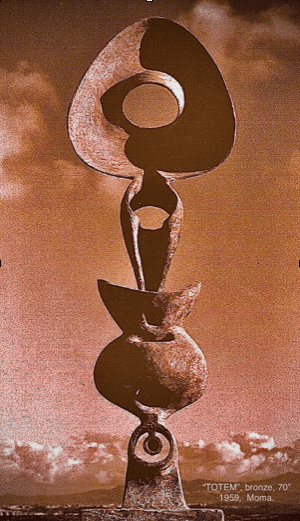
In early 1958, Marian gave birth to daughter number three. In the spring, she returned to the U.S. with three daughters in tow aboard the American Export Line Constitution while David headed east to travel around the world. In the fall, Totem was shown as part of “Recent Sculpture USA”, a traveling show that moved from MOMA in New York to Boston (Museum of Fine Arts), Detroit (Institute of Art), Chicago (Art Institute), St. Louis (City Art Museum), Denver (Denver Art Museum) and Los Angeles (County Museum)(1959-1960). Home for the next three years was Bloomfield Hills, Michigan where David resumed working in the architectural office of Eero Saarinen.
The family returned to Rome in 1961 pursuant to a Graham Foundation Fellowship for the Advanced Studies in Fine Arts. This Italian sojourn lasted 4 years and was a very productive time. Marian developed a working relationship with foundries and form-makers and created many bronze sculptures of varying sizes. She also gave birth to two more daughters. Her work was shown in Europe and the U.S., in both solo and group settings.

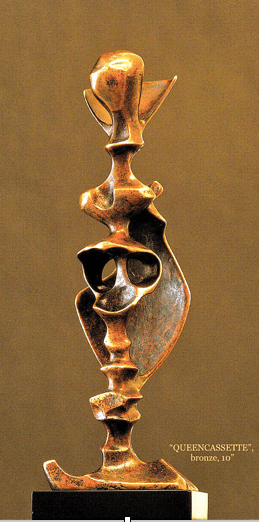
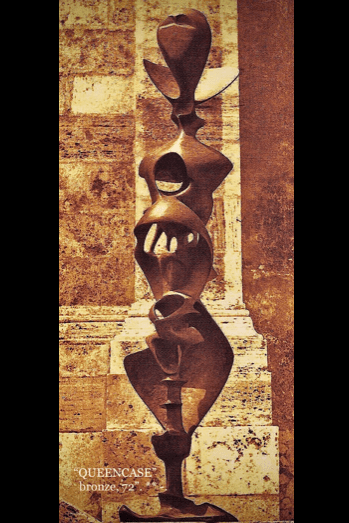
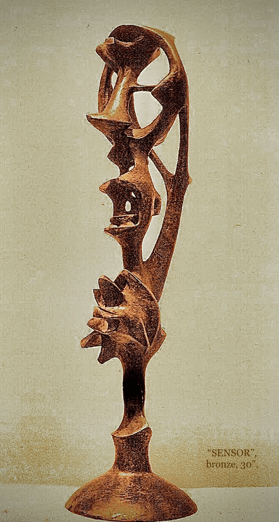

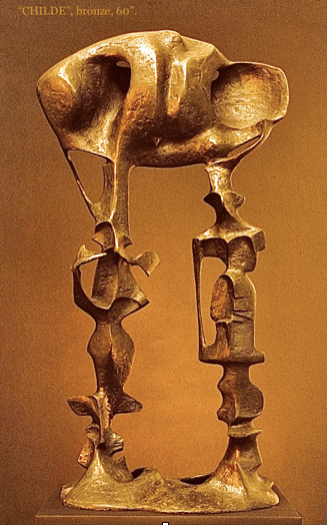
The return to the U.S. in late 1965 took them to New Haven, Connecticut so that David could continue working at the architectural firm. Eero Saarinen had died and the office, now Roche Dinkeloo and Associates, had moved to Hamden, Connecticut. Marian was honored with a Louis Comfort Tiffany Grant in Sculpture that year. Art consultant Dene Ulin (Dene Ulin Gallery, NYC) became interested in representing her work. While the work was being shown and she was raising her five girls, Marian was awarded a Fellowship at the Radcliffe Institute of Advanced Study at Harvard University and interacted with the Bunting Institute. On April 8, 1969 Marian gave a recorded seminar entitled “Shell Sculpture: Growth & Form.”
In the late summer of 1969, this time with a Guggenheim Foundation Grant, the family returned to Italy for a third extended stay. Another vibrant and prolific period ensued. More bronzes were sculpted and cast using the well known foundries from before. The work from this period, graceful and flowing, reflected Marian’s study and appreciation of shell forms and complex surfaces.
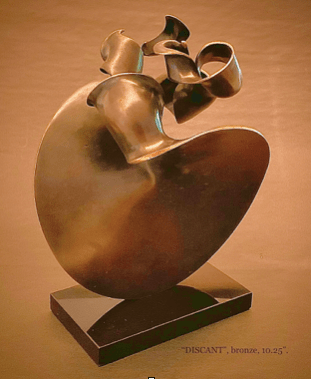

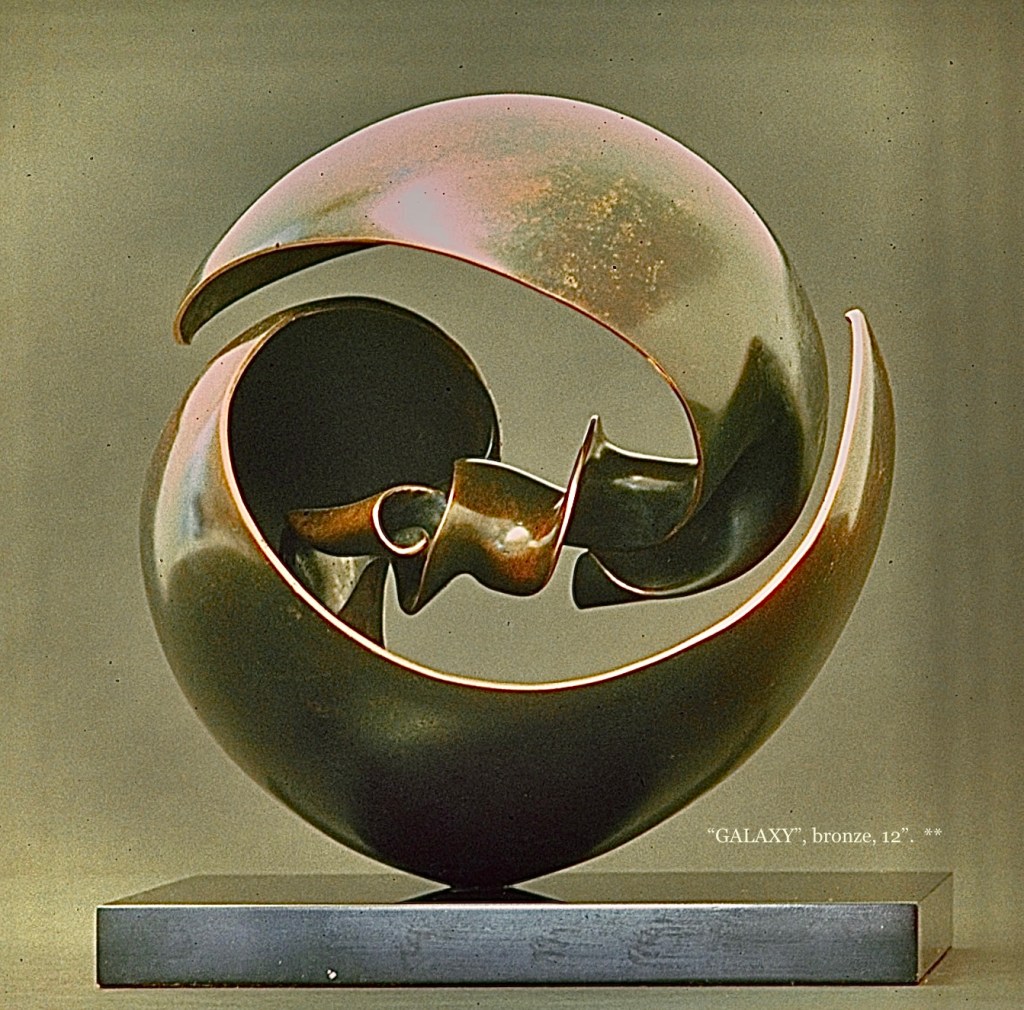
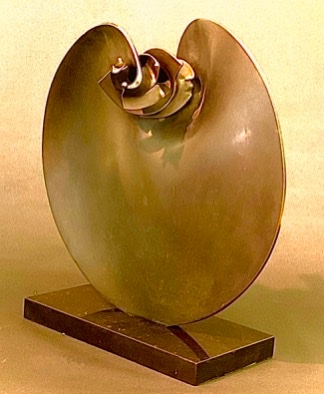

In late 1972, it was time to return to the U.S. Marian’s work, described as exuding “simplicity and elegance”, was being exhibited and sold to collectors. In the meantime, Marian and David undertook some different projects, including the purchase and reconstruction of an 1880’s building in Stony Creek, CT. In 1975, Marian returned to her first intention and resumed teaching by joining the faculty of the Creative Arts Workshop, in New Haven, CT. In 1979, Marian was invited to participate as a speaker at the Detroit Institute of the Arts as part of the Radcliffe Centennial Symposium “Women in the Arts.” Her talk entitled “The Next Decade According to Janus” reviewed trends in the art world by looking both to the past and the future.
In 1981, she was invited to participate in a conference entitled “Reflections on Women’s Creativity in the Arts”, sponsored by the Seven Sister Colleges and held at the Waveny Estate in New Canaan, CT. Marian was asked to provide her reflections on the advantages and obstacles she had encountered as a female sculptor.
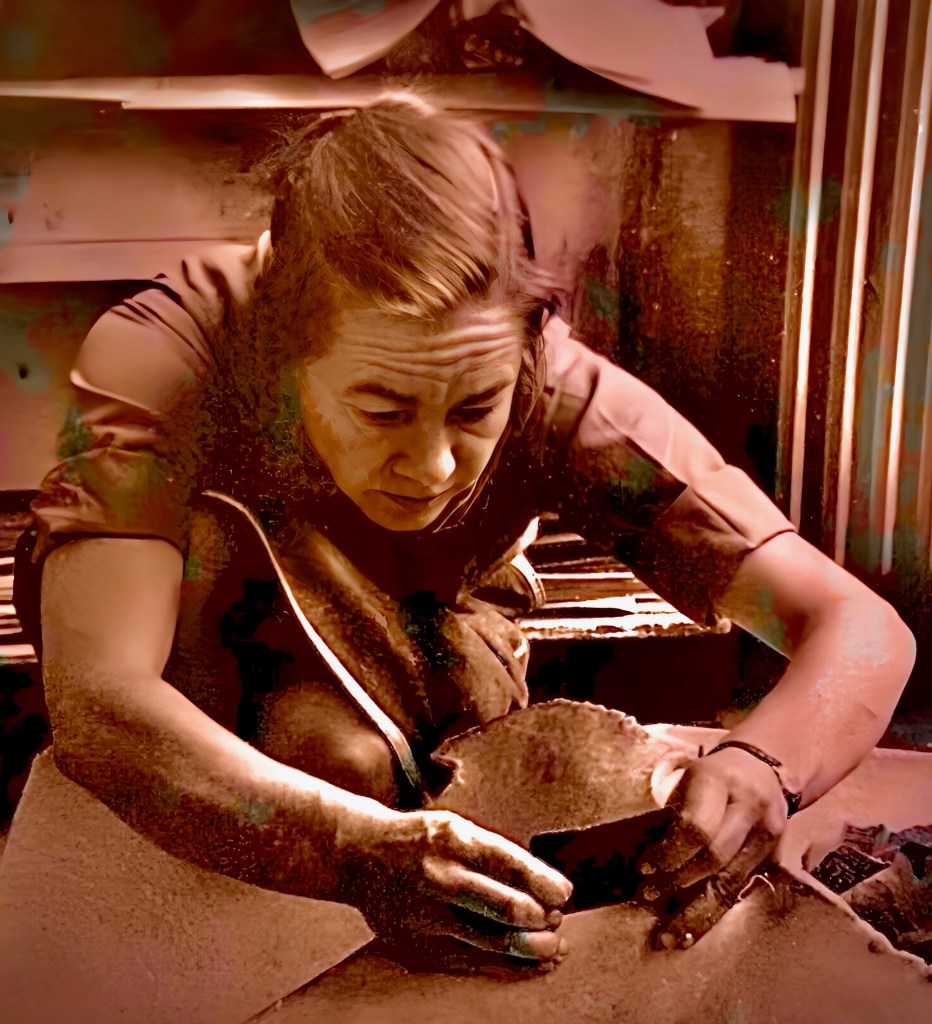
Through the 1980’s and 1990’s Marian produced another body of exquisite bronze castings, using foundries in Rhode Island, Connecticut and New York, which included a series of birds and other abstract forms. Some of the pieces were spin-cast and finished to a high luster. In addition to bronze, she created a series of paper collages depicting hill towns, and another series on the theme: “I sing loudly.”
During the ’90’s Marian and David designed and built a modern, panoramic villa near Todi, Italy. They converted the original stone farmhouse into studio space where they continued to explore and create art for six months every year, inspired by the landscape, history and culture.
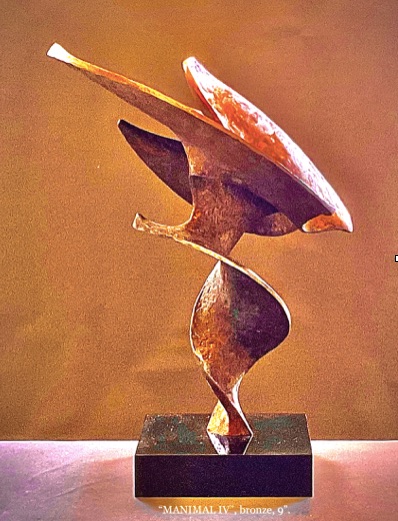
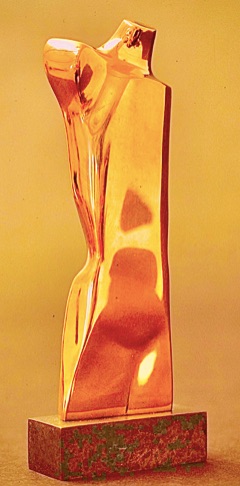


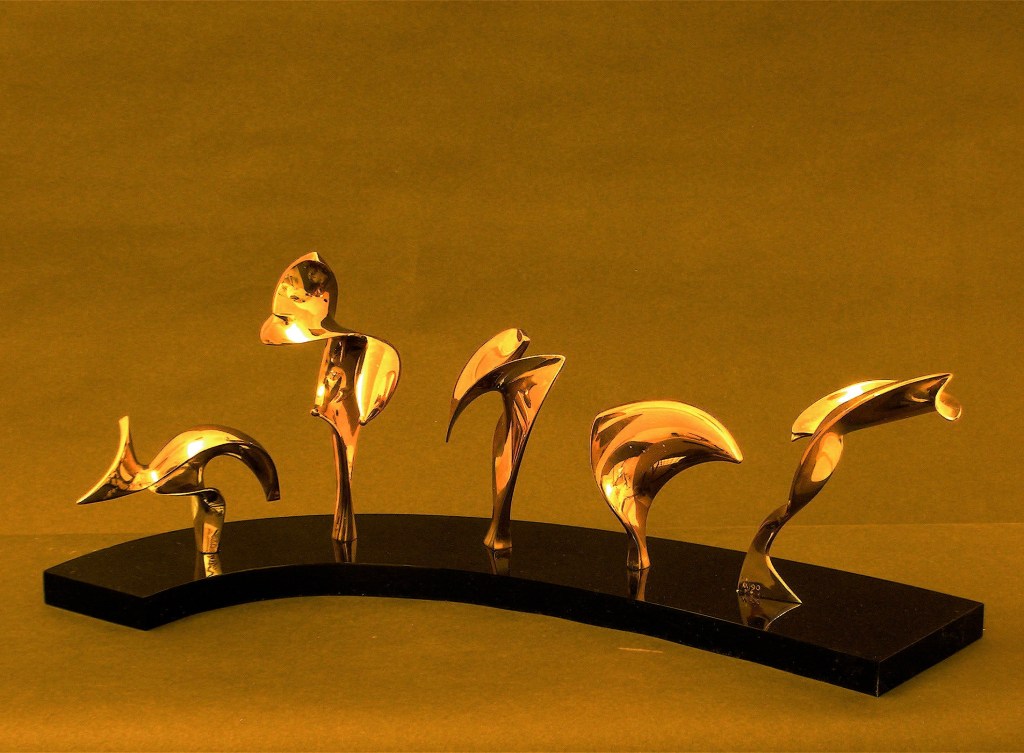

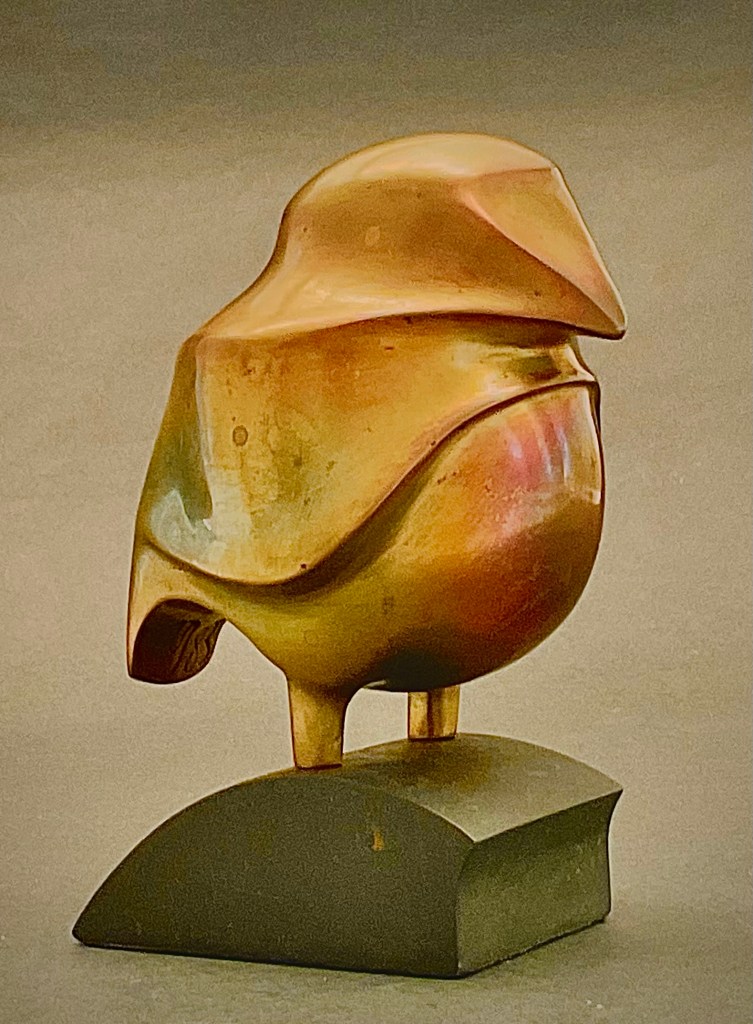

First and foremost, Marian was a sculptor though her gift was broad and pervasive: she could make something interesting and beautiful out of anything, as she demonstrated throughout her long life. In later years, when she no longer worked in bronze, she continued creating art in various media. She had a reverence for materials and their versatility. Her no-cost resources might be discarded wire, blown out egg shells, pressed flowers, expired magazines, old foam packaging, used clothing….From fine art to folk art she could do it all. She made an intricate victorian doll house for her grandchildren, a series of miniature woven baskets, countless exquisitely covered eggs, ornate wire soldered eggs-some with hinges, puppets, games, a finely crafted quilt (a family heirloom), among many other creations.
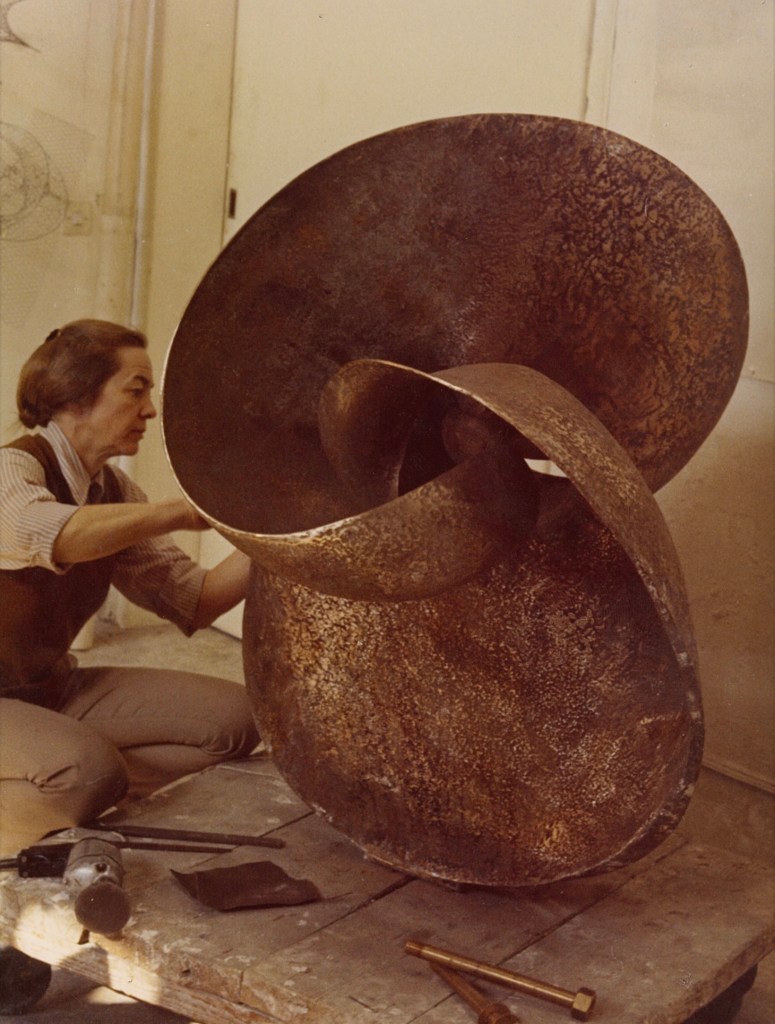
Marian was able to produce a significant body of work in addition to creating and raising a large family. Her contribution to mid-20th century modern expressionist sculpture is clearly meaningful, as her work compares favorably with other prominent contemporary American sculptors.
Awards
- The Cranbrook Academy of Art Achievement Award in Sculpture, 1952
- American Academy in Rome (Rome Prize collaborator)
- Graham Foundation Fellowship for Advanced Studies in Fine Arts, 1961- 1962
- The Louis Comfort Tiffany Foundation Grant in Sculpture, 1965
- Guggenheim Grant Fellowship, 1969
- Fellow Radcliffe Institute of Advanced Studies, Harvard University, 1968-70
Exhibits
Solo Shows
- Sculpture Center, New York, NY; 1966
- Dene Ulin Gallery, New York, NY; 1968
- Davidson Art Center, Wesleyan University, Middletown, CT; 1969, 1979
- American Academy Gallery, Rome, Italy; 1971-72
Group Shows
- Cranbrook Academy of Art Traveling show; 1952
- American Consulate Theater Young American Artist’s Series – Concert and MRJ Sculpture Exhibit, Rome, Italy; 1958
- Museum of Modern Art – Recent Sculpture U.S.A., New York, NY; traveling show, Denver Art Museum Denver, CO; Los Angeles County Museum, Los Angeles, CA; City Art Museum, St. Louis, MO; Museum of Fine Arts, Boston, MA. (May, 1959 – October, 1960)
- American Academy of Art in Rome, Italy; 1960, 1971
- Galerie Claude Bernard, Paris, France; 1960
- Schneider Gallery, Rome, Italy; 1964
- Sculpture Center, New York, NY; 1966
- Dene Ulin Gallery, New York, NY; 1966, 1968, 1969
- Jewish Museum, New York, NY; 1967
- Portuguese Embassy, New York, NY; 1967
- Hamden Gallery, New Haven, CT; 1968, 1972
- Cummings Art Center, Connecticut College, New London, CT; 1969
- Davidson Art Center, Wesleyan University, Middletown, CT; 1969, 1975, 1979, 1982
- Rome Center of Liberal Arts, Loyola University, Rome, Italy; 1971
- USIS Gallery, Rome, Italy; 1972
- Galleria Nuovo Carpine, Rome, Italy; 1972
- Centro Internazionale d’Arte di Orvieto, Orvieto, Italy; 1972
- Forum Gallery, New York, NY; 1975
- Willoughby Wallace Library Gallery, Stony Creek, CT; 1981
- Rolly-Michaux Gallery, New York, NY; 1981-2, 1985, 1987, 1991-2, 1995
- Rolly-Michaux, Boston, MA; 1995
- David Findlay Jr. Fine Art Gallery, New York, NY, and Chicago, IL; 2007
- The Reboli Center for Art and History, Stony Brook, NY; 2024
Seminars and Lectures
- “Shell Sculpture: Growth & Form”, April 8, 1969. Bunting Institute Seminar, Schlesinger Library, Radcliffe Institute for Advanced Study, Cambridge, MA
- “Janus”, March 31, 1979. Radcliffe Centennial Symposium Women in the Arts, Detroit Institute of Arts, Detroit, MI
- “Reflections on Women’s Creativity in the Arts”, November 17, 1981, sponsored by the Seven Sisters Colleges, Waveny Estate (Waveny Park), New Canaan, CT
Teaching
- Milwaukee Art Institute, Milwaukee, WI (1943-47)
- Jewish Art Center in Milwaukee, Milwaukee, WI (1943-47)
- Saugatuck School of Painting (Ox-Bow), Saugatuck, MI (1943-47)
- Toledo Museum of Art, Toledo, OH (1947-50)
- University of Southern California, Los Angeles, CA (Summers 1950-51)
- Milwaukee State Teacher’s College, Milwaukee, WI (1952-53)
- Creative Arts Workshop, New Haven, CT (1975-77)
Marian Ruth Müeller Jacob
 Marian R. Jacob